Innovative Trends in Plastic Mold Design and Fabrication
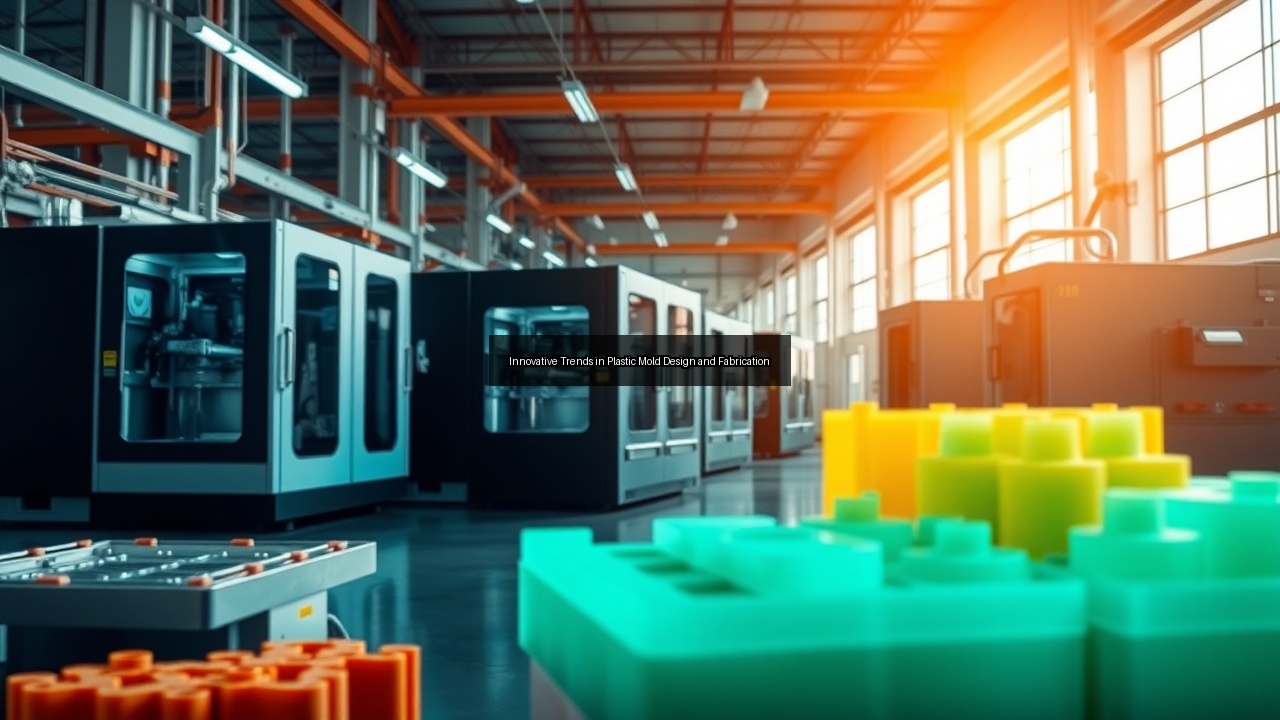
Emerging Innovations in Plastic Mold Design
Advanced Materials in Mold Design
Plastic mold manufacturers increasingly leverage advanced materials to enhance mold durability, precision, and performance. Traditional steel molds dominate the market, but innovative alternatives like aluminum and specialized alloys are gaining traction. These materials provide excellent thermal conductivity, essential for efficient cooling during the injection molding process. The use of aluminum can also lead to significant reductions in weight, making molds easier to handle and install.
Additionally, advancements in composite materials, including reinforced plastics, allow for lightweight molds that retain strength and rigidity. Carbon fiber-reinforced plastics, for example, are becoming more popular due to their high strength-to-weight ratio. This not only improves the mold's performance but also reduces energy consumption during the molding process. The introduction of 3D printing technology for mold components further revolutionizes the design landscape, enabling faster prototyping and reduced lead times. Manufacturers can now create intricate designs with complex geometries, significantly enhancing the mold's functionality while cutting down on production costs. 3D printing also allows for rapid iteration and testing of design modifications, providing manufacturers with the flexibility to adapt to changing requirements more readily.
Smart Technology Integration
Smart technology is reshaping plastic fabrication by introducing automation and connectivity in mold design. Manufacturers now utilize sensors and IoT (Internet of Things) devices to monitor mold performance in real-time. These innovations facilitate predictive maintenance, reducing downtime and optimizing the injection molding process. By integrating temperature and pressure sensors, manufacturers can gain insights into the thermal dynamics of the mold, allowing for adjustments that enhance cycle times and product quality.
Automated systems allow for precise adjustments during production, ensuring consistent quality and reducing waste. Furthermore, the integration of AI-driven analytics helps manufacturers analyze data from mold performance, leading to informed decision-making and improved design iterations. Advanced algorithms can identify patterns in mold wear and tear, enabling manufacturers to schedule maintenance before failures occur, thus avoiding costly production halts. The shift towards smart technology not only streamlines operations but also enhances the overall efficiency of the plastic injection molding industry. With the rise of Industry 4.0, manufacturers are now able to create fully interconnected production environments where real-time data drives operational efficiency.
Sustainable Practices in Plastic Fabrication
Sustainability has emerged as a critical focus in plastic mold design and fabrication. Manufacturers are increasingly adopting eco-friendly practices, such as utilizing recycled materials and implementing energy-efficient processes. The development of biodegradable plastics, derived from natural sources such as cornstarch or sugarcane, is also gaining popularity, offering manufacturers a greener alternative without compromising performance. The transition towards sustainable plastic fabrication not only reduces environmental impact but also aligns with consumer demand for eco-conscious products.
Companies committed to sustainability often implement closed-loop systems that minimize waste and enhance recycling efforts. For instance, some manufacturers are adopting systems that collect scrap material generated during production and reprocess it into usable feedstock, significantly reducing waste. Furthermore, the design of molds is now being influenced by lifecycle assessments that consider the environmental impact from raw material extraction to end-of-life disposal. By integrating these practices, plastic mold manufacturers can contribute to a more sustainable future while maintaining competitive advantages in the market. The emphasis on sustainability is not just a trend but a fundamental shift in how the industry operates, influencing everything from material selection to production methods.
Revolutionizing the Injection Molding Process
The Role of Thermoplastics in Modern Molding
Thermoplastics play a pivotal role in modern injection molding, offering versatility and ease of processing. These materials can be melted and reformed multiple times without degrading, making them ideal for a variety of applications. Common thermoplastics like polypropylene, polyethylene, and polycarbonate are widely used due to their favorable properties, including impact resistance and durability. As manufacturers continue to explore new thermoplastic formulations, such as bio-based and high-temperature variants, the potential for innovative products and applications in plastic molding is boundless, driving growth in the industry.
The ability to mold complex shapes with precision has expanded the applications of thermoplastics in industries ranging from automotive to consumer goods. Innovations like multi-material injection molding allow for the combination of different thermoplastics in a single process, enabling the production of parts with varied properties, such as softer grips on harder bodies. This capability not only enhances product functionality but also opens new design possibilities that were previously unattainable.
Enhancements in Injection Mold Manufacturing
Recent enhancements in injection mold manufacturing have transformed how molds are designed, produced, and maintained. The introduction of CNC machining and EDM (Electrical Discharge Machining) has significantly improved mold precision and turnaround times. These technologies allow manufacturers to create highly detailed and intricate molds that were previously challenging to achieve. Moreover, the trend towards modular mold designs enables manufacturers to interchange components easily, reducing costs associated with mold maintenance and repair. Such innovations facilitate quicker adaptations to market demands, allowing for faster production cycles and the capability to handle diverse product lines.
Advanced simulation software also plays a crucial role in mold design, allowing engineers to predict how a mold will perform under various conditions before it is manufactured. These simulations can identify potential issues, such as weak points and thermal hotspots, enabling engineers to make adjustments that enhance the mold's longevity and performance. As a result, manufacturers can respond promptly to customer needs, driving efficiency and profitability in the injection molding sector.
Cost-Efficiency through Automation
Automation in the injection molding process leads to significant cost savings and enhanced productivity. By incorporating robotic systems for material handling, loading, and even quality inspection, manufacturers minimize labor costs and human error. Automated systems enable continuous operation, allowing for longer production runs with minimal interruption. This capability not only boosts output but also maintains quality consistency across batches. Additionally, advanced software solutions streamline scheduling and inventory management, further optimizing resource allocation. With the integration of machine learning algorithms, these systems can even predict demand fluctuations, allowing manufacturers to adjust their production schedules proactively.
As a result, manufacturers can achieve economies of scale, making injection molding a more attractive option for producing high volumes of molded plastic products cost-effectively. The combination of automation and enhanced data analytics creates an agile manufacturing environment, where quick pivots to meet market demands are not only possible but seamless.
Applications and Benefits of Innovative Mold Technologies
Industries Transforming with Plastic Injection Molding
Plastic injection molding serves a multitude of industries, each reaping the benefits of innovative mold technologies. The automotive sector, for instance, utilizes molded plastic components for lightweighting and improved fuel efficiency. Consumer electronics manufacturers rely on injection-molded parts for intricate designs that house delicate components. Medical device manufacturers benefit from the ability to produce high-precision, sterile components required for health applications. The regulatory landscape, particularly in the medical field, demands high levels of compliance, and advanced mold technologies help meet these stringent requirements.
Packaging industries have also embraced plastic injection molding for creating lightweight, durable containers that meet stringent regulatory standards. The versatility of injection molding allows these industries to adapt quickly to changing market trends, ensuring they remain competitive and innovative. With the rise of e-commerce, the demand for custom packaging solutions that can withstand shipping stresses has increased, pushing manufacturers to innovate continuously in mold design and production techniques.
Benefits of Thermoforming in Production
Thermoforming offers distinct advantages alongside traditional injection molding methods. This process involves heating a plastic sheet until pliable and then forming it over a mold to create various shapes. The benefits include reduced material waste, as thermoforming can utilize thinner sheets effectively. This method also allows for faster production cycles, making it ideal for shorter runs and prototypes. Thermoformed products often exhibit excellent surface quality and can be produced with minimal tooling costs compared to injection molds. Industries such as packaging, automotive, and consumer goods frequently adopt thermoforming due to these efficiencies.
Moreover, thermoforming is particularly advantageous for creating large parts or packaging solutions, where the cost of injection molding may be prohibitive. The flexibility in design and the ability to quickly switch between different molds make thermoforming an attractive option for businesses looking to test market response or rapidly adapt to consumer trends. Manufacturers can produce customized solutions quickly, enhancing their ability to respond to consumer demands.
Case Studies of Successful Mold Designs
Several case studies demonstrate the impact of innovative mold designs on product success. One notable example involves a leading consumer electronics manufacturer that redesigned its injection mold to accommodate a new smartphone case. By utilizing advanced thermoplastics and incorporating cooling channels, the new mold reduced cycle times by 20%, allowing for higher output without sacrificing quality. This case illustrates the importance of integrating advanced materials and design principles to enhance production efficiency.
Another case study highlights a medical device manufacturer that adopted a modular mold system, enabling quick changes to accommodate various product lines. This flexibility resulted in a 30% decrease in time-to-market for new products. Such case studies underscore the importance of innovation in mold design, showcasing how manufacturers can leverage technology to enhance production efficiency and product quality. They also serve as benchmarks for other companies in the industry, illustrating the tangible benefits that can be achieved through investment in advanced mold technologies.
In conclusion, as the plastic injection molding industry continues to evolve, staying abreast of emerging innovations in mold design is paramount for manufacturers seeking to maintain a competitive edge. The integration of advanced materials, smart technologies, sustainable practices, and innovative manufacturing techniques will not only improve efficiency and reduce costs but also drive growth and adaptation in an ever-changing market landscape.