Enhancing Fastener Quality through Innovative Thread Rolling Techniques
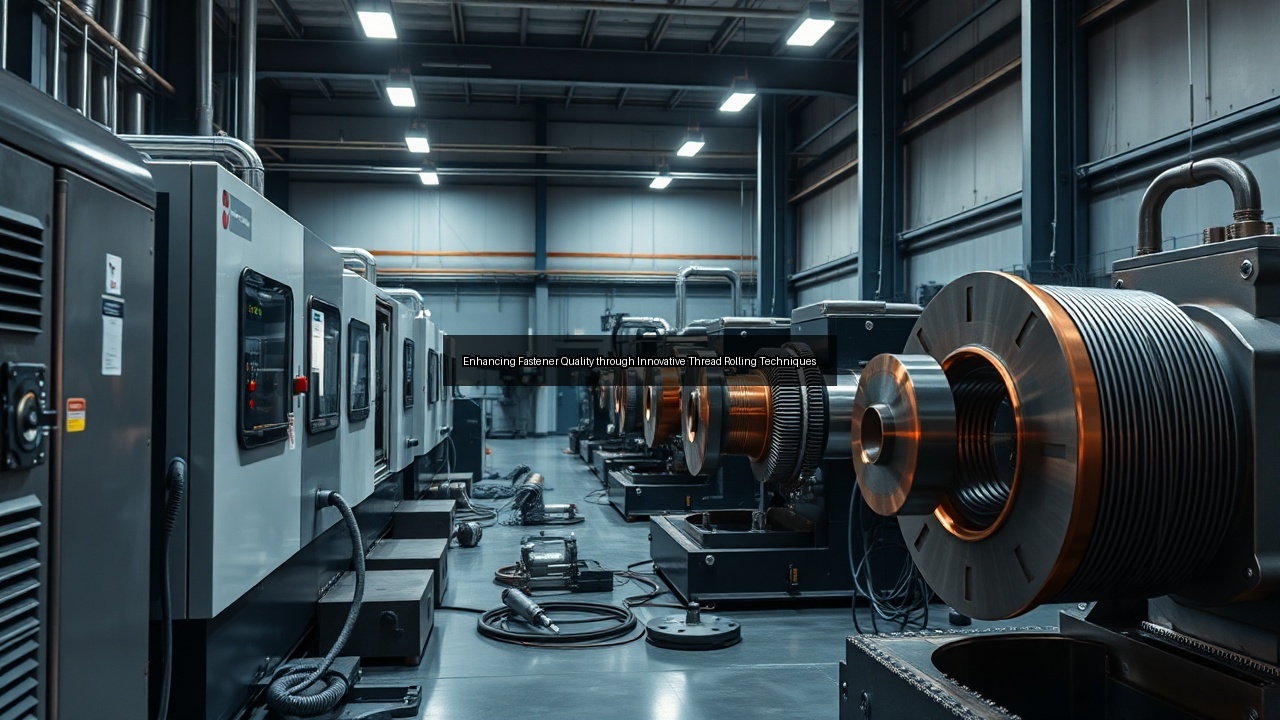
Understanding Thread Rolling Techniques
What is Thread Rolling?
Thread rolling is a cold-forming process used to create threads on metal fasteners and components. This technique involves the use of specially designed rolling dies that deform the surface of a metal blank, forming threads without removing material. The process applies pressure to the metal, resulting in stronger threads due to the work hardening that occurs during deformation. Thread rolling typically produces more precise and uniform threads compared to traditional methods, making it an essential technique in fastener manufacturing.
Benefits of Thread Rolling in Fastener Manufacturing
Thread rolling offers several advantages in the fastener manufacturing industry. One key benefit is the improved tensile strength of the threads. The cold-forming process aligns the grain structure of the metal, enhancing its mechanical properties. Additionally, thread rolling generates less waste since it does not involve cutting away material. This efficiency not only reduces costs but also minimizes the environmental impact associated with metal machining waste. Furthermore, thread-rolled components often feature superior surface finishes, which can be critical in applications where friction and wear are concerns.
Comparison with Traditional Threading Methods
Traditional threading methods, such as cutting or machining threads, involve material removal, which can lead to inherent weaknesses in the remaining structure. Compared to these methods, thread rolling produces threads that are generally stronger and more durable. While traditional methods may allow for more complex geometries, thread rolling excels in mass production scenarios where speed and consistency are paramount. Moreover, the elimination of cutting tools in thread rolling reduces the cycle time and overall production costs, making it a more attractive solution for high-volume fastener manufacturing.
Innovations in Thread Rolling Technology
Advanced CNC Machining Applications
CNC (Computer Numerical Control) machining has revolutionized the thread rolling process by allowing for greater precision and automation. Advanced CNC machines can execute complex thread profiles with exceptional accuracy, reducing human error and increasing throughput. Manufacturers can program these machines to produce various thread sizes and types, ensuring that they meet specific client specifications. This adaptability allows for rapid prototyping and customization, making CNC-driven thread rolling services highly sought after in industries requiring exacting standards.
Integrating EDM Machining for Enhanced Precision
EDM (Electrical Discharge Machining) complements thread rolling by offering high levels of precision in creating intricate designs and features. When manufacturers integrate EDM machining into their thread rolling processes, they can achieve unprecedented accuracy in thread profiles, especially in complex applications. EDM machining utilizes electrical sparks to remove material, making it ideal for creating fine details that traditional threading methods cannot easily achieve. The synergy between EDM and thread rolling enhances the overall quality of fasteners, meeting stringent industry standards.
Role of Swiss Screw Machining in Thread Rolling
Swiss screw machining plays a critical role in modern thread rolling services, particularly for small-diameter components. This technique enables the production of highly intricate parts with exceptional accuracy. Swiss screw machines work by feeding the material through a guide bushing while rotating, allowing for tight tolerances and high-speed production. Integrating Swiss screw machining with thread rolling enhances the capability to create complex threaded components, essential for industries like aerospace and medical devices where precision is non-negotiable. Manufacturers can produce fasteners with multiple features, minimizing the need for secondary operations.
Industry Applications and Impact
Thread Rolling in Aerospace Fasteners
The aerospace industry demands the highest quality standards for fasteners due to safety and performance considerations. Thread rolling techniques play a pivotal role in meeting these stringent requirements. Fasteners used in aircraft must withstand extreme conditions, including high temperatures and pressures. Thread rolling offers the necessary strength and durability, making it the preferred method for producing aerospace fasteners. Manufacturers often use specialized materials and coatings to further enhance the performance of these components, ensuring they can endure the rigors of flight.
Military Standards and Thread Rolling
Military applications also rely heavily on thread rolling for fasteners and components. The military enforces strict specifications for durability and reliability in equipment. Thread rolling meets these standards by providing fasteners that can resist corrosion, wear, and fatigue. The process’s efficiency in producing large volumes of high-quality fasteners ensures that military suppliers can meet demand without compromising quality. Furthermore, manufacturers often undergo rigorous testing and certification processes to ensure that their thread-rolled components comply with military standards, reinforcing the reliability of their products in critical applications.
Oil and Gas Industry Requirements for Threaded Components
The oil and gas sector requires robust and reliable fasteners to withstand harsh environments, including extreme temperatures and high pressures. Thread rolling techniques provide the necessary performance characteristics for these applications. Fasteners used in drilling and extraction equipment must exhibit high tensile strength and resistance to corrosion. Thread rolling achieves these results by enhancing the structural integrity of the threads. Manufacturers often employ advanced materials and coatings to ensure longevity and reliability, crucial factors in preventing equipment failures and costly downtime in this industry.
Choosing the Right Thread Rolling Service
Factors to Consider When Selecting a Manufacturer
Selecting the right thread rolling service involves evaluating several key factors. First, consider the manufacturer’s experience and expertise in producing the specific type of fasteners required for your application. Review their track record with similar projects and industries. Next, assess the technology and machinery they use. Advanced CNC and EDM capabilities can significantly enhance the quality of the final product. Finally, consider their capacity for customization and responsiveness to client needs, as these factors can greatly impact your project's success.
Inventory Management for Threaded Fasteners
Effective inventory management is essential when dealing with threaded fasteners produced via thread rolling services. Maintaining an optimal stock level ensures that you can meet production demands without overstocking, which ties up capital. Implementing a just-in-time (JIT) inventory system can help streamline operations, reducing waste and enhancing efficiency. Collaborating with your thread rolling manufacturer to establish consistent delivery schedules can further improve inventory management, ensuring you always have the necessary components on hand when needed.
Best Practices for Quality Assurance in Thread Rolling
Quality assurance is critical in ensuring that thread-rolled fasteners meet industry standards. Manufacturers must implement rigorous testing protocols, including dimensional inspection and mechanical property testing. Utilizing advanced measurement techniques, such as coordinate measuring machines (CMM), ensures that every fastener meets specified tolerances. Additionally, regular audits of the thread rolling process and equipment maintenance contribute to maintaining high-quality production. Collaborating with a manufacturer that prioritizes quality assurance can significantly enhance your product’s reliability and performance.
See Also
- The Importance of Quality Control in Thread Rolling Services
- Thread Rolling Technology Shaping the Future of Manufacturing
- How Thread Rolling Services Enhance Metal Component Durability
- Exploring the Benefits of Thread Rolling in Aerospace Applications
- How Thread Rolling Services Revolutionize Metal Fabrication in Wisconsin